
How to Search Criminal Dockets
Start with the official Kansas Case Search, the main route into a public Harvey County District Court criminal case. Accept the terms and select District Court. A case number works best when you have one. Name searches can match more than one person, so narrow the results with Harvey County, the Criminal filter, and a tight file-date range. Remember the portal is a public access tool, not the official court record.
Municipal misdemeanors belong to the issuing city court. Newton, Hesston, Halstead, North Newton, and Sedgwick each keep separate city dockets. State felonies and misdemeanors stay in district court. A federal prosecution lives in PACER instead.
- Accept the terms and choose District Court.
- Select Case Number, Party Name, Business Name, or Citation Number.
- Enter the term, choose Harvey County, and select Criminal when available.
- Open the matching case and read its public events index.
- Ask the clerk for a specific document or certified copy if needed.
Harvey Criminal Number Formats
Kansas eCourt reshaped how case numbers look. The official guide describes a county abbreviation, a year, a case type, and a sequence. A Harvey format example is HV-2022-CR-000001. Cases begun before migration may still carry a form like 2022-CR-000001. Neither example points to a real case.
Harvey County joined eCourt on September 12, 2022. Type an older number exactly as printed. If it fails, call the clerk or use the courthouse terminal rather than guessing a new sequence. McPherson shares the Ninth Judicial District, but a Harvey search still requires Harvey County.
What a Criminal Docket Shows
Kansas calls the chronological list an events index or register of actions. It can show public filings, event labels, counsel, settings, pleas, judgments, public payment entries, and dispositions. But it does not promise a downloadable copy of each filing, and a brief label may not state an order's full legal effect.
| Case number | The court identifier, often with HV, year, CR, and sequence. |
|---|---|
| Charge event | The filed allegation or later charge activity shown publicly. |
| Setting | A first appearance, arraignment, pretrial, trial, or sentencing date. |
| Plea or trial | The procedural event recorded by the court. |
| Disposition | A dismissal, plea result, verdict, judgment, sentence, or other outcome. |
Need a judgment or sentencing order? Describe that exact paper when you request it from the clerk. The events index alone is not the whole case file.
Harvey Criminal Clerk Routes
The official staff directory lists Criminal Clerk Krista Woodworth at 316-284-6897 and Clerk of the Court Erik Whedbee at 316-284-6824. Start with the clerk. Judges' chambers do not handle record requests. Give the case number, record type, and filing date if you know them.
Harvey County District Court
Second floor, Harvey County Courthouse
800 N Main St
Newton, KS 67114
PO Box 687, Newton, KS 67114
316-284-6824
County listings show conflicting post-office boxes, so confirm the mailing destination before you send a request. The county publishes no dedicated public records email or dropbox.
Stages on a Criminal Docket
The usual reading path is Filing › Arraignment › Pretrial › Plea or Trial › Disposition › Sentencing. Not every case reaches each stage. A dismissal, diversion, plea, trial result, and sentence are distinct entries. Filed motions and orders may appear between settings.
A continuance or reset moves a date. It does not erase the old event. It also does not mean the case was dismissed. Confirm any future appearance through the Harvey County court calendar or the clerk. When an event label is unclear, the filed order controls.
Harvey Criminal Dispositions in 2025
The official report for the period ending June 30, 2025 counts 342 Harvey County felony dispositions: 72 dismissals, 228 guilty pleas, 40 other outcomes, and two jury trials. The felony row reports no diversion disposition and no court trial.
The misdemeanor row lists 19 deferred or diversion outcomes, 54 dismissals, 66 guilty pleas, and 20 other outcomes. These are dispositions, not people, active cases, or forecasts. The figures show why Harvey criminal dockets can end several different ways.
Harvey County Criminal Docket Courts
It shares the Ninth Judicial District with McPherson County. But the Harvey clerk keeps Harvey files. A district magistrate judge serves within that same court and uses no separate clerk database. Harvey County District Court hears state-law felonies and misdemeanors.
Municipal courts handle city ordinance violations and municipal misdemeanors, and city clerks maintain those dockets. An appeal may later reach district court. Yet the original municipal case never becomes a Kansas Case Search record. Read the issuing court on the citation or notice first.
Harvey Web and Terminal Access
Kansas Supreme Court Rule 22 provides for courthouse public-terminal access. It also explains the limits on internet records. A missing online result or absent document icon does not prove that no public record exists. The terminal may show more public electronic data, while nonpublic material stays closed.
When web search fails, use the clerk counter, a phone call, or the terminal. A written Kansas Open Records Act request works too. The state form permits delivery preferences, and the county publishes mail and fax routes.
Harvey Court File or KBI History
A Harvey County criminal docket records events in one court case. A Kansas Bureau of Investigation criminal-history check is a separate state product with different rules. Neither one substitutes for the other.
| Record | Question answered | Route |
|---|---|---|
| Events index | What public events occurred in one case? | Kansas Case Search or Harvey clerk |
| Filed order | What did the court formally enter? | Clerk, terminal, or request |
| Criminal history | What does the separate state history show? | Kansas Bureau of Investigation |
Use the record that fits the question, and request a certified copy when formal authentication is required.
Public Access to Criminal Dockets
Open adult criminal docket data may be public, yet access can shrink under sealing, expungement, investigative exemptions, protective orders, and other law. Juvenile offender and child-in-need-of-care records do not sit in an ordinary adult criminal search. The official Kansas expungement statute sets out how a court may expunge a record.
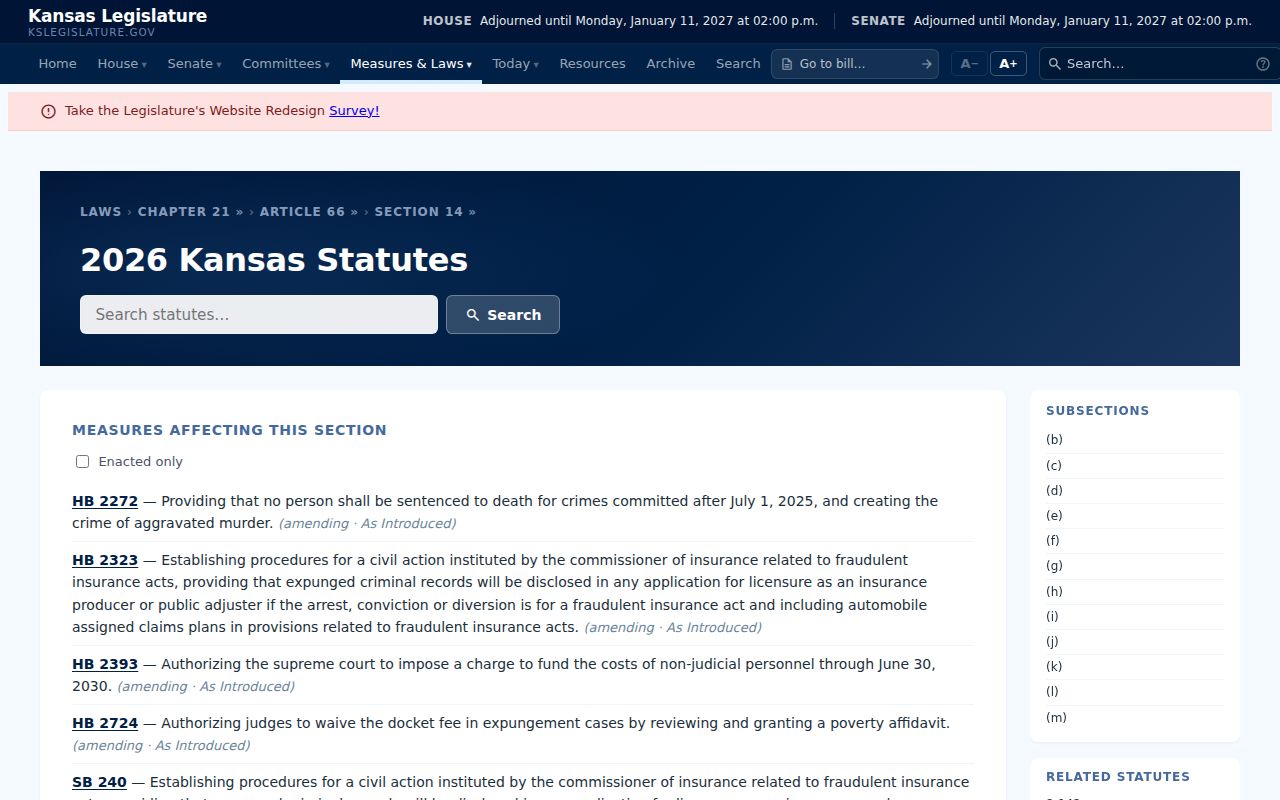
The statute treats expungement as a court process. It is not the same event as a dismissal or a completed diversion.
Key access rules:
Rule 22 separates internet and courthouse-terminal access.
K.S.A. 45-221 addresses exemptions and separable public portions.
K.S.A. 38-2309 limits juvenile-file access.
Ask the Harvey clerk about any specific record, and never infer why a case is absent.
Harvey Criminal Docket Document Requests
A docket entry label alone is not the filed order itself. When you write to request a paper from a Harvey County criminal docket, be specific. Name the case number, the exact document, and its rough filing date. Say how you want it delivered and whether it must be certified. The Kansas KORA form gives you fields for all of this. A narrow description lets the clerk pull the right page without touching private material that belongs to someone else.
Fees are allowed under K.S.A. 45-219, which also permits advance payment before work begins. Harvey County posts no current copy schedule. So ask the clerk for an estimate up front. K.S.A. 45-218 sets the response framework, though redaction, fee review, or a clarification question can stretch the wait.
Older Harvey Criminal Docket Files
Harvey County moved onto the eCourt system in 2022. Cases begun before that rollout may still carry older numbers and live only on paper. Start with the exact case number. Then ask the clerk three things: whether the file was migrated, whether its public index sits at the courthouse terminal, and whether the paper you want requires a written request. An older Harvey criminal docket case that shows nothing online tells you very little.
Keep your inquiry tied to one specific public record. The clerk decides access under current law and the file's own status.